 listicle
Gluten Free Soy Free Bread: 7 Safe Picks for 2026
Table of Contents
- Gluten Free Soy Free Bread: What to Look For Before You Buy
- Store-Bought Gluten Free Soy Free Bread Options That Deliver
- Soy-Free Sandwich Bread: Texture, Taste, and Best Uses
- Gluten-Free Bread Ingredients: What Belongs in Your Loaf
- Gluten-Free Soy-Free Bread Recipe for Home Bakers
- Gluten-Free Bread Without Yeast: Quick Loaf Method
- Storage, Freezing, and Serving Tips for Lasting Freshness
- Frequently Asked Questions
Last Updated: October 6, 2026
Gluten Free Soy Free Bread: What to Look For Before You Buy
Finding gluten free soy free bread that holds up in a lunchbox and tastes like something you'd actually choose comes down to two things: reading the full ingredient list and understanding how a loaf was made. This guide from Gluten Free Things walks through safe picks, plus a homemade recipe, so you can stock your kitchen with confidence.
Soy hides in surprising places in commercial bread. It shows up as soy lecithin, soy flour, soybean oil, or soy protein isolate, often added as an emulsifier or dough conditioner. The FDA guidance on food allergen labeling requires soy to be declared on packaging, which gives you a starting point, but cross-contact risk is a separate question entirely.
Understanding Cross-Contact and Label Claims
Cross-contact happens when a gluten-free or soy-free product touches shared equipment, surfaces, or airborne flour during production. A label that says "gluten-free" confirms the ingredients, but it does not guarantee the facility avoids soy.
For anyone managing celiac disease or a severe soy allergy, this distinction matters. A dedicated facility that produces only gluten-free, soy-free items removes that risk almost entirely. A shared commercial bakery that runs soy-containing dough on the same line does not, no matter how careful the cleaning protocol claims to be.
When you read a label, look for these signals:
- A "certified gluten-free" seal from a recognized third-party certifier
- An explicit "contains: soy" or "made in a facility that also processes soy" statement
- A phone number or contact form so you can ask about shared lines directly
Store-Bought Gluten Free Soy Free Bread Options That Deliver
Most roundups of gluten free soy free bread either list soy-free loaves that still contain gluten or gluten-free loaves that still contain soy.
Product | Format | Typical Reported Texture | Also Free From | What to Verify |
|---|---|---|---|---|
Gluten Free Things breads | Sandwich loaves, bagels, buns, pizza crust | Soft, sliceable crumb | Gluten, eggs, dairy, soy, nuts, corn | Confirm current product line and shipping window online |
Udi's Gluten-Free White Sandwich Bread | Sliced white sandwich loaf | Soft, mild, kid-friendly | Gluten, soy | Check the current ingredient statement for soy lecithin or soybean oil |
Udi's Gluten-Free Whole Grain Sandwich Bread | Sliced whole-grain sandwich loaf | Heartier chew, nuttier flavor | Gluten, soy | Confirm the gluten-free claim and soy status on the package |
Schar Gluten Free Classic White Bread | Shelf-stable white loaf | Firmer crumb, holds up to toasting | Gluten, soy, dairy, egg, lactose | Confirm soy-free status on the label; formulas vary by region |
Canyon Bakehouse Gluten Free Stay Fresh Country | Country-style sliced loaf | Soft, slightly sweet, bendable | Gluten, soy, dairy, egg, nuts | Verify soy ingredients on packaging; some varieties differ |
How to read this table without getting burned. A product can appear on a soy-free list and still carry a "made in a facility that also processes soy" statement. That warning is not the same as containing soy, but for a severe soy allergy it is the deciding detail. Before you buy, do three things:
- Read the full ingredient statement, not just the front-of-package claims. Soy hides as soy lecithin, soy flour, soybean oil, soy protein isolate, and textured vegetable protein.
- Look for the allergen statement below the ingredient list. "Contains: soy" is a hard stop. "May contain" or "made in a facility" is a cross-contact signal you have to weigh against your own sensitivity.
- Call or email the manufacturer and ask one specific question: "Is this loaf made on a line that also runs soy-containing products?" Reputable allergen-friendly bakeries answer plainly.
Our own bakery makes everything in a dedicated gluten-free facility, and our breads skip gluten, eggs, dairy, soy, nuts, and corn at once. For a household juggling celiac disease plus a soy allergy plus a dairy intolerance, that single fact removes most of the label-reading work.
The trade-off with any dedicated allergen-free bakery is that you may need to order ahead or have it shipped rather than grabbing a loaf on a quick grocery run.
Soy-Free Sandwich Bread: Texture, Taste, and Best Uses
The best soy-free sandwich bread should be soft enough to bend without cracking and sturdy enough to hold up under a thick spread of peanut butter or a stack of deli slices.
Loaf Style | Crumb | Flavor | Best Use | Watch Out For |
|---|---|---|---|---|
White sandwich | Soft, fine, flexible | Mild, neutral | Kids' lunches, PB&J, cold cuts | Can tear if sliced too thin while cold |
Whole-grain sandwich | Denser, slightly chewy | Nutty, earthy | Toasted sandwiches, hearty deli stacks | Dries out faster than white loaves |
Country-style | Soft with a tender crust | Mildly sweet | Open-faced melts, French toast | Crust softens in the fridge |
Sourdough-style | Tangy, slightly firm | Tangy, complex | Grilled cheese, panini | Tang can clash with sweet fillings |
Quick / yeast-free | Dense, quick-bread-like | Mild, slightly sweet | Toast, sturdy sandwiches | Crumbles if not fully cooled before slicing |
Texture, taste, and best-use notes. White sandwich loaves tend to be the mildest in flavor and the most flexible for kids' lunches. Country-style and whole-grain options bring more chew and a nuttier taste, which suits toasted sandwiches and open-faced melts.
A common mistake is judging a gluten-free loaf straight from the fridge. Cold bread crumbles. Let it come to room temperature, or give it a quick toast, and the crumb softens noticeably. For sandwiches you plan to pack, slice the loaf at room temperature, then assemble.
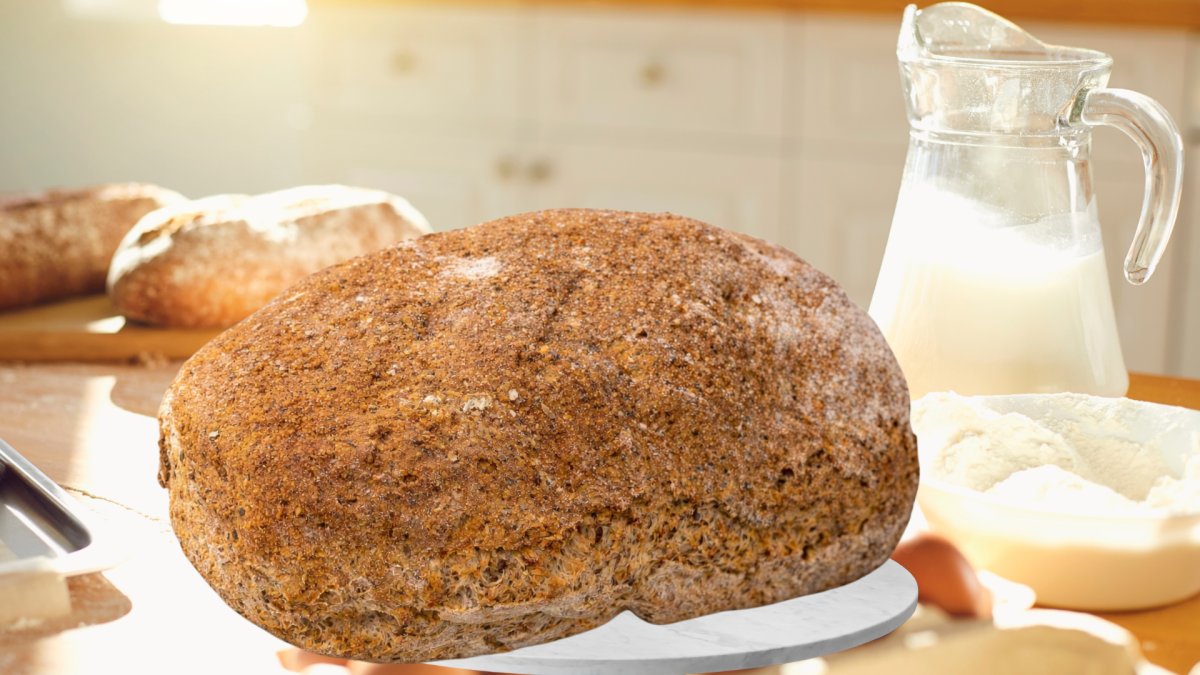
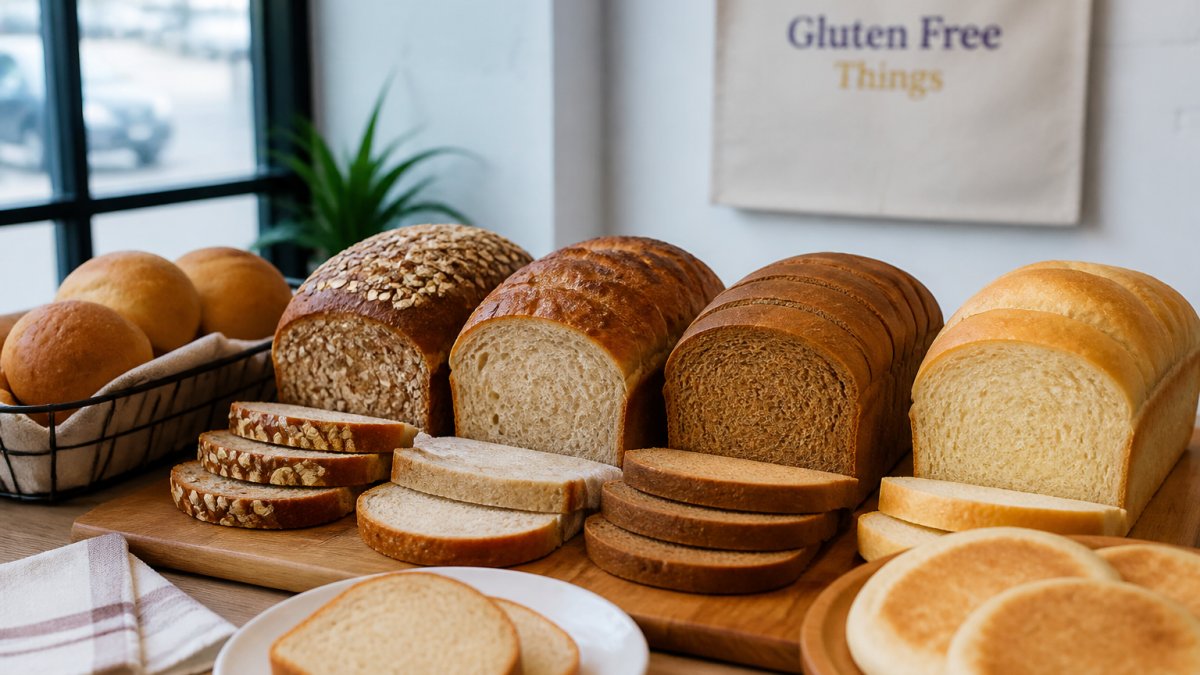
Close-up from Gluten Free Things, golden gluten-free soy-free sandwich loaf on a white platter cutting board, with a pitcher of almond milk or milk of your choice.
Achieving the right balance of moisture and structure in these loaves often requires supplemental nutrition, which is why many bakers also integrate a high-quality soy free protein into their daily dietary routine.
Gluten-Free Bread Ingredients: What Belongs in Your Loaf
Gluten-free bread ingredients fall into three jobs: structure, binding, and lift. Understanding which ingredient does what helps you evaluate a store-bought label or adjust your own recipe.
Flours and Starches That Build Structure
Rice flour, sorghum, millet, and oat flour (certified gluten-free) form the base. They lack gluten's stretch, so recipes pair them with starches like tapioca, potato, or arrowroot to add elasticity and lightness. A blend usually outperforms a single flour.
Binders, Leaveners, and Flavor Builders
Without gluten, something has to hold the crumb together. Psyllium husk, flaxseed, and chia are common binders. Baking powder and yeast provide lift. For flavor, a touch of honey, maple syrup, or applesauce adds sweetness and moisture without soy.
Gluten-Free Soy-Free Bread Recipe for Home Bakers
This recipe makes one standard loaf and uses core ingredients, so it's a good starting point if you're new to allergen-free baking.
Shop Gluten Free Vegan Products →
What You'll Need:
- 2 cups gluten-free all-purpose flour blend (soy-free)
- 1 cup tapioca starch
- 1 tablespoon psyllium husk powder
- 2 teaspoons baking powder (soy-free)
- 1 teaspoon salt
- 1 1/2 cups warm water
- 2 tablespoons olive oil
- 1 tablespoon maple syrup
Steps:
- Whisk the flour blend, tapioca starch, psyllium, baking powder, and salt in a large bowl.
- Stir the warm water, olive oil, and maple syrup together in a separate cup.
- Pour the wet ingredients into the dry and mix until a thick, sticky dough forms.
- Let the dough rest for 10 minutes so the psyllium can hydrate and bind.
- Scoop into a greased loaf pan and smooth the top with a wet spatula.
- Bake at 375°F for 45 to 50 minutes, until the top is golden and a skewer comes out clean.
- Cool completely in the pan before slicing, or the crumb will tear.
Expected Result: A soft, sliceable loaf with a mild flavor that works for sandwiches and toast.
Gluten-Free Bread Without Yeast: Quick Loaf Method
Yeast-free gluten-free bread relies on baking powder and a binder instead of fermentation, which cuts the total time to about an hour. The texture is denser than a yeast loaf, closer to a quick bread or soda bread, but it slices cleanly and toasts well.
Use the same ingredient list as above and skip any yeast. Mix, rest for 10 minutes, and bake at 375°F for 40 to 45 minutes. The result is a sturdy everyday loaf that holds up to sandwiches and doesn't require a rise.
For anyone avoiding yeast alongside gluten and soy, this method is the simplest path to fresh bread at home.
Storage, Freezing, and Serving Tips for Lasting Freshness
Gluten-free bread stales faster than wheat bread because it lacks gluten's moisture-retaining network. Store a cut loaf in an airtight bag at room temperature for two to three days, or slice and freeze it the day you buy or bake it.
Freezing is the real secret. Slice the whole loaf first, then freeze the slices in a single layer before transferring them to a freezer bag. You can pull out one or two slices at a time and toast them straight from frozen.
To revive a dry slice, sprinkle it lightly with water and warm it in a toaster oven. A quick pass in a skillet with a little olive oil also brings back a soft, fresh crumb.
Finding a gluten free soy free bread that tastes good, holds together, and won't put anyone at risk takes some label-reading, but it's entirely doable. At Gluten Free Things, we bake every bread, bagel, pizza crust, and bun in a dedicated gluten-free kitchen free from gluten, eggs, dairy, soy, nuts, and corn, and we ship nationwide so you can stock your freezer without a trip to Arvada.
Frequently Asked Questions
How can I tell whether gluten-free bread is also soy-free?
Read the full ingredient list and the allergen statement on the package. Soy can appear as soybean oil, soy lecithin, soy protein isolate, or soy flour, so scan for all four names. Look for a dedicated 'Contains' statement that omits soy, and check whether the facility also handles soy. If the label is unclear, contact the manufacturer directly before buying. A bread labeled gluten-free is not automatically soy-free, so always verify both claims on the current packaging.
Which gluten-free, soy-free breads work best for sandwiches?
Sandwich-friendly loaves need enough structure to hold fillings without crumbling. White and whole-grain varieties tend to slice cleaner than sourdough or rustic loaves. Look for breads with a soft, fluffy crumb and a flexible texture that bends rather than snaps when you fold a slice. Toasting lightly before assembling improves structure and prevents sogginess. Homemade loaves made with psyllium or flax binders also perform reliably for sandwiches.
What ingredients can replace soy in gluten-free bread?
Soy often appears in gluten-free bread as a binder, emulsifier, or protein booster. Common replacements include psyllium husk, ground flaxseed, chia seeds, and xanthan gum. For moisture and richness, use olive oil, coconut oil, or avocado oil instead of soybean oil. If a recipe calls for soy lecithin, sunflower lecithin works as a direct swap. These alternatives support structure and texture without introducing soy, and most are easy to find in grocery stores or online.
How can I avoid cross-contact when buying gluten-free, soy-free bread?
Choose products made in dedicated gluten-free facilities that also control for soy. Look for language like 'made in a dedicated gluten-free facility' or 'soy-free facility' on the packaging. Avoid bulk bins and bakeries that handle wheat and soy on shared equipment. When ordering online, check the brand's allergen policy page. If you have celiac disease or a severe soy allergy, call the manufacturer to confirm their cleaning and sourcing practices before you buy.
Can you give me an easy recipe for homemade gluten-free soy-free bread?
Combine 2 cups gluten-free flour blend, 1 teaspoon xanthan gum, 1 tablespoon psyllium husk, 1 tablespoon baking powder, and 1/2 teaspoon salt. In a separate bowl, whisk 3 eggs, 1 cup unsweetened almond milk, 1/4 cup olive oil, and 1 tablespoon maple syrup. Mix wet into dry, pour into a greased 8x4-inch loaf pan, and bake at 350°F for 45 to 50 minutes. Cool completely before slicing.