 ultimate-guide
Allergen Free Bakery in Arvada: Safe Options
Table of Contents
- What to Look for in an Allergen Free Bakery
- How to Identify Cross-Contamination in Bakeries
- Dedicated Gluten Free Bakery Options in Arvada
- Top Allergen-Free Menu Options to Try
- Allergen Friendly Bread Delivery: How It Works
- Custom Orders and Dietary Accommodations
- Why Quality and Safety Matter More Than Price
- Frequently Asked Questions
Last Updated: October 4, 2026
What to Look for in an Allergen Free Bakery
Finding a safe allergen free bakery means understanding the difference between a business that claims to be allergen-friendly and one that actually prevents cross-contamination.
The most critical factor is whether a bakery operates a dedicated gluten-free facility or shares equipment with conventional baking operations. A dedicated facility means all surfaces, utensils, ovens, and mixers are reserved exclusively for allergen-free products.
Dedicated Facilities vs. Shared Kitchens
A dedicated gluten-free bakery operates entirely separate from conventional baking.
Bakeries that bake allergen-free items in a shared kitchen must rely on cleaning protocols and staff discipline. These bakeries often use separate prep areas, dedicated utensils, and careful timing to prevent cross-contact.
At Gluten Free Things, our dedicated facility means every batch of bread, bagel, and pastry is produced in an environment where cross-contamination is structurally impossible.
Ingredient Transparency and Labeling
Transparency tells you whether a bakery understands allergen safety or is simply following a checklist. Look for detailed ingredient lists that name every component, including additives and processing aids.
A trustworthy allergen-free bakery will provide:
- Full ingredient declarations for every product
- Information about where ingredients are sourced
- Clear labeling of potential allergens processed in the facility
The best bakeries go further. They publish their ingredient sourcing, explain why they choose specific suppliers, and answer questions about processing methods. This transparency signals that they're thinking about safety at every step, not just checking boxes.
How to Identify Cross-Contamination in Bakeries
Cross-contamination happens when allergens transfer from one product to another through shared surfaces, equipment, or utensils. In a bakery environment, flour dust travels through the air, settles on surfaces, and clings to equipment. A bakery that doesn't understand this reality, or doesn't take it seriously, will contaminate allergen-free products.
Questions to Ask Before Ordering
Before placing an order, call the bakery and ask these specific questions. Their answers reveal how seriously they take allergen safety.
About their facility:
- Do you operate a dedicated gluten-free facility, or do you bake conventional products in the same kitchen?
- If shared: What physical separation exists between allergen-free and conventional baking areas?
- How do you prevent flour dust from conventional baking from reaching allergen-free products?
About their process:
- Who handles allergen-free products, and do they work exclusively on those items during their shift?
- Do staff change clothes, gloves, and equipment between handling conventional and allergen-free products?
- How do you clean equipment between batches? What cleaning agents do you use?
About ingredients:
- Can you provide a complete ingredient list with sources for every component?
- Are any ingredients processed in facilities that also handle the top allergens?
- Do you use any shared additives, baking aids, or processing ingredients with conventional products?
About their track record:
- How long have you been producing allergen-free products?
- Have you had any customer reports of allergic reactions?
- Do you carry any third-party certifications for allergen-free production?
A bakery confident in their safety will answer these questions directly and in detail. Vague responses, defensive answers, or "we're careful" without specifics suggest they haven't built safety into their systems.
Red Flags That Indicate Risk
Certain answers or practices signal that a bakery is not managing allergen risk properly.
Facility and process red flags:
- "We bake everything in the same kitchen but we're very careful", this is not a substitute for physical separation
- Staff who handle both conventional and allergen-free products without changing clothes or equipment
- No documented cleaning protocol or use of generic cleaning products not designed for allergen removal
Ingredient red flags:
- Vague ingredient lists that use terms like "spice blend" or "natural flavors" without detail
- Ingredients sourced from suppliers who also process major allergens, with no segregation
- Use of shared additives or processing aids between allergen-free and conventional products
Operational red flags:
- New to allergen-free baking with no track record or certifications
- Bakeries that claim to be allergen-free but also produce products containing the allergens you're avoiding
- No clear labeling or packaging that identifies which products are safe for which restrictions
- Staff who seem unfamiliar with allergen protocols or cannot explain their safety procedures
Dedicated Gluten Free Bakery Options in Arvada
When you're searching for a dedicated gluten-free bakery in your area, Gluten Free Things stands out as a local option built specifically for safety. A dedicated facility means the entire operation, from ingredient receiving to packaging, is designed around preventing cross-contamination.
Gluten Free Things: Your Local Safe Haven
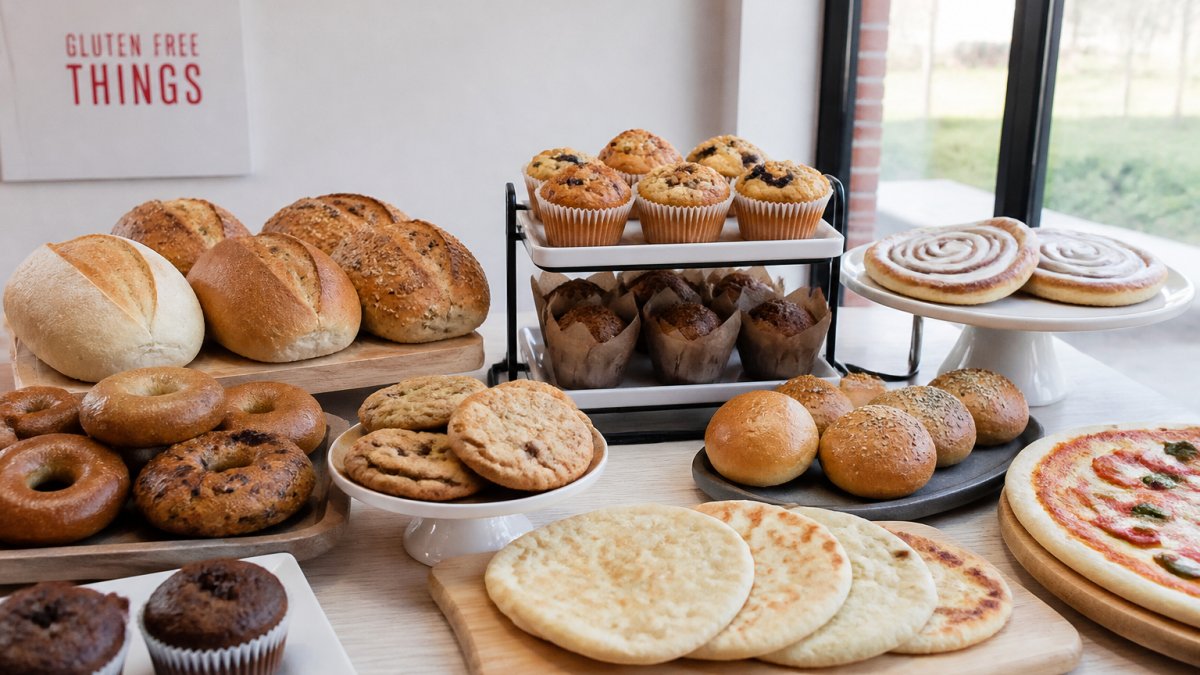
Gluten Free Things operates a dedicated gluten-free bakery in Arvada that produces breads, bagels, pizza crusts, buns, and pastries free from gluten, eggs, dairy, soy, nuts, and corn.
Infographic illustrating the selection process at our allergen free bakery in Arvada for gluten-free goods.
Our product line includes vegan options for customers following plant-based diets, making it possible for families with multiple dietary restrictions to find something everyone can eat.
What Sets a Dedicated Facility Apart
A dedicated gluten-free bakery eliminates the need to rely on perfect cleaning, perfect timing, or perfect staff discipline to prevent cross-contamination. Instead, safety is built into the structure.
In a dedicated facility:
- All flour is gluten-free flour, so flour dust in the air is safe
- All equipment is used exclusively for allergen-free products
- Staff work only with allergen-free ingredients during their shift
- Cleaning protocols target allergen removal, not just general sanitation
This structural approach to safety is why families managing celiac disease or severe allergies often prefer dedicated bakeries. You're not trusting a process, you're relying on an environment designed around your needs.
Top Allergen-Free Menu Options to Try
An allergen free bakery should offer variety that goes beyond a single bread loaf. Real options mean you can find something for different meals, occasions, and tastes.
Shop Gluten Free Vegan Products →
Vegan and Plant-Based Baked Goods
Plant-based baking requires replacing eggs (a binder and leavening agent) and dairy (fat and moisture) with alternatives that deliver the same texture and rise. A bakery that does this well produces vegan baked goods that don't taste like a compromise.
Look for vegan options that include:
- Breads with good crumb structure and crust development (not dense or gummy)
- Bagels with proper chew and structure
- Pastries and cookies with satisfying texture, not dry or crumbly
- Items that stay fresh for several days without becoming hard or stale
Vegan baking often uses ingredients like aquafaba (chickpea liquid), flax eggs, or commercial egg replacers as binders, plus plant-based oils and non-dairy milk for moisture.
Bread, Bagels, and Specialty Items
The foundation of any allergen-free bakery is bread. A good gluten-free bread holds together for sandwiches, toasts without crumbling, and stays soft for several days.
Quality bread requires:
- A flour blend that mimics gluten's binding properties
- Proper hydration and mixing to develop structure
- Adequate rising time to develop flavor and texture
- Baking techniques that create crust without drying the crumb
Bagels are even more technically demanding. A proper bagel has a chewy interior and a slight crust, achieved through boiling before baking.
Specialty items, pizza crusts, buns for sandwiches, focaccia, expand what's actually possible in your diet.
Allergen Friendly Bread Delivery: How It Works
For customers outside the immediate Arvada area, an allergen friendly bread delivery system makes it possible to access dedicated gluten-free products without traveling to the bakery. Understanding how delivery works helps you make decisions about freshness, cost, and convenience.
Shipping Methods and Freshness Guarantees
Shipping baked goods requires protecting them from damage while maintaining quality. Most bakeries use insulated boxes with cooling packs or gel packs to maintain temperature during transit. The goal is to deliver bread that tastes fresh, not stale or dried out.
When ordering shipped products:
- Confirm the bakery's packaging method and how long transit takes
- Ask whether they ship frozen, refrigerated, or at room temperature
- Understand the expected shelf life upon arrival
- Check whether they offer any freshness guarantee or replacement policy
Gluten Free Things offers online ordering with shipping options designed to arrive fresh.
Local Pickup and Pre-Order Options
Local pickup eliminates shipping time and cost, making it ideal if you live in or near Arvada. Pre-ordering ensures the bakery has your items ready, especially for specialty products or large orders.
Pre-order systems work best when:
- The bakery confirms your order and pickup time clearly
- You understand any lead time required (24 hours, 48 hours, etc.)
- Pickup windows are convenient for your schedule
- The bakery holds items at proper temperature until you collect them
For local customers, pickup means you get products at peak freshness, often the day they're baked. This is the ideal scenario if you have the ability to collect orders regularly.
Custom Orders and Dietary Accommodations
Beyond standard menu items, a quality allergen-free bakery should accommodate custom requests. This means you can order birthday cakes, wedding desserts, or specialty items tailored to your specific restrictions.
Custom orders require the bakery to:
- Understand your specific allergen restrictions (some people avoid soy but not corn; others need corn-free but tolerate soy)
- Formulate recipes that meet your needs while delivering the flavor and texture you want
- Communicate clearly about ingredients, potential cross-contact, and any limitations
- Deliver on timeline commitments for special occasions
Gluten Free Things works with customers to create custom items that fit their dietary needs. This flexibility matters when standard options don't cover your situation.
Why Quality and Safety Matter More Than Price
The cheapest allergen-free bakery product is not the best value if it doesn't prevent cross-contamination or if it tastes poor enough that you won't actually eat it. Real value comes from products that are genuinely safe and genuinely good.
When comparing options, consider:
Factor | Impact on Value |
|---|---|
Dedicated facility | Eliminates cross-contamination risk entirely |
Ingredient transparency | Lets you make informed decisions about what's safe for you |
Product quality | Determines whether you'll actually enjoy eating the items |
Shelf life and freshness | Affects how long products stay edible and whether shipping is practical |
Variety | Determines whether everyone in your household can find something they'll eat |
Customer service | Affects how well the bakery handles questions, custom orders, and issues |
A bakery that charges more but operates a dedicated facility, sources ingredients carefully, and produces high-quality products is a better investment than a cheaper option that cuts corners on safety or quality.
Finding a safe allergen free bakery means prioritizing dedicated facilities, ingredient transparency, and proven safety practices over price alone. Whether you visit in person or order online for shipping, you'll experience the safety and flavor that comes from a bakery built specifically around your needs. Celiac Disease Foundation guidance on cross-contamination and Food Allergy Research & Education safety protocols both emphasize the importance of dedicated facilities, the same standard Gluten Free Things maintains.
Frequently Asked Questions
What does 'dedicated' mean when looking for an allergen-free bakery?
A dedicated allergen-free bakery uses separate equipment, preparation surfaces, and ingredients exclusively for allergen-free products. This prevents cross-contamination from shared tools or airborne particles. Unlike bakeries that produce both regular and allergen-free items in the same space, dedicated facilities maintain strict separation to ensure safety for those with celiac disease, severe allergies, or multiple dietary restrictions. Always verify a bakery's dedication level before ordering.
How can I verify if a bakery is truly safe for my specific food allergies?
Contact the bakery directly and ask about their cross-contamination protocols, ingredient sourcing, and facility separation. Request detailed ingredient lists and information about shared equipment. A trustworthy allergen-free bakery will provide transparent answers, explain their cleaning procedures, and may offer ingredient documentation. Ask if they've served customers with your specific allergy before. Be cautious if staff cannot answer detailed questions about preparation methods or ingredient origins.
Are there bakeries in Arvada that offer both gluten-free and vegan options?
Yes. Gluten Free Things specializes in vegan breads, bagels, pizza crusts, and buns that are free from gluten, eggs, dairy, soy, nuts, and corn. This means customers following vegan diets or those with multiple dietary restrictions can find options that meet both requirements. Whether you need gluten-free products, vegan baked goods, or items that satisfy both lifestyles, a dedicated bakery with diverse offerings ensures everyone at your table finds something safe and delicious.
How do I safely order allergen-free baked goods for shipping?
Choose a bakery experienced in shipping allergen-free products with proper packaging to prevent damage and maintain freshness. Confirm their shipping methods and delivery timeframes before ordering. Ask about packaging materials and whether items arrive sealed or require immediate refrigeration. Many bakeries offer local pickup as an alternative to shipping, which may provide fresher products and eliminate transit concerns.