 listicle
Allergen Free Snacks for School: 15 Safe Ideas
Table of Contents
- Why Allergen Free Snacks for School Need a Plan
- Nut-Free School Snacks That Kids Actually Eat
- Dairy-Free School Snacks Without the Guesswork
- How to Read Food Labels for Allergens Before You Buy
- Allergy-Friendly Classroom Snacks for Safe Sharing
- Homemade vs. Packaged: Budget, Freshness, and Convenience
- Balanced Nutrition and Age-Appropriate Portions
- Conclusion: Building a Snack Routine That Works
- Frequently Asked Questions
Last Updated: October 9, 2026
Why Allergen Free Snacks for School Need a Plan
Packing allergen free snacks for school is less about one miracle product than building a repeatable system. At Gluten Free Things, we bake in a dedicated facility free from gluten, eggs, dairy, soy, nuts, and corn, so we think constantly about what "safe" means on a lunchbox label.
The families who handle this best filter by the allergy first, then by what the kid will actually eat.
Below, we break down 15 allergen free snacks for school across nut-free, dairy-free, and classroom-sharing categories, plus label reading, budgeting, and age-based portions.
Nut-Free School Snacks That Kids Actually Eat
Nut-free snacks fail for one of two reasons: they taste like cardboard, or they're banned by the school anyway. Peanut-free and tree nut-free policies are common in elementary classrooms, and many schools ask that shared snacks arrive in original packaging with a visible ingredient list. The CDC guidance on food allergies in schools outlines how schools typically manage allergen-safe spaces, and it's worth reading before you buy in bulk.
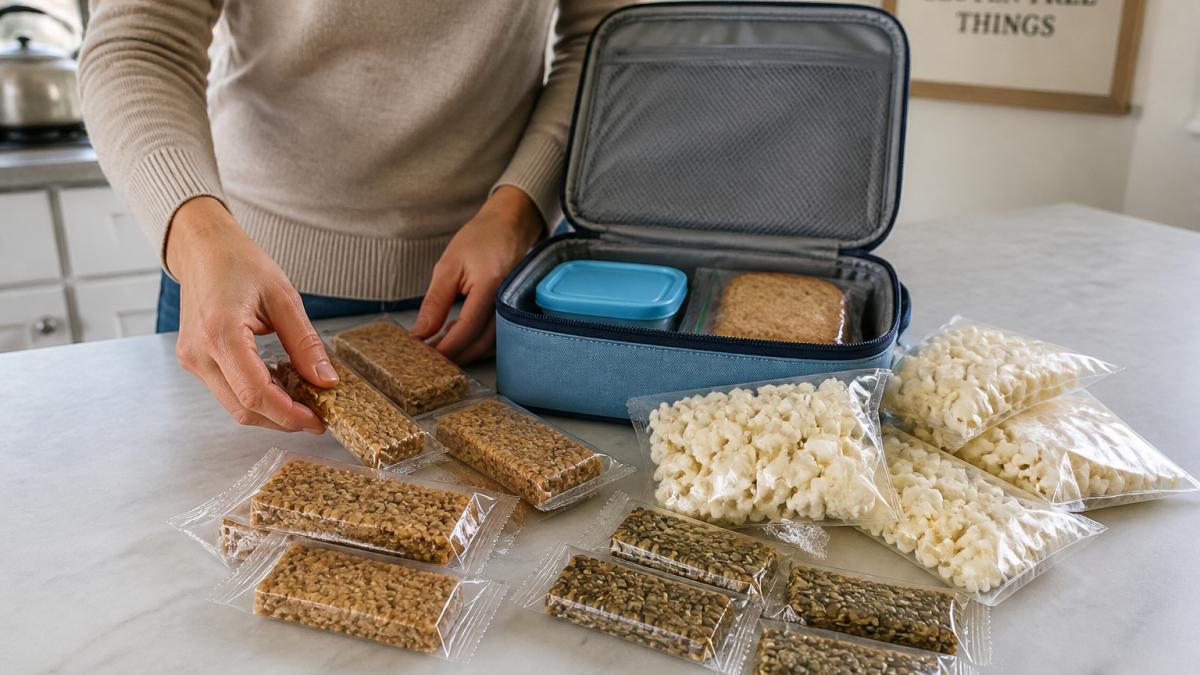
Packaged Picks: Bars, Popcorn, and Seed Snacks
Packaged snacks win on convenience and label transparency. Options to evaluate:
- MadeGood Granola Minis - individually portioned, easy to toss in a lunchbox, and named among allergy-friendly school snack brands.
- Safe + Fair Popcorn - the brand describes its popcorn as free from all top nine allergens and publishes allergen policy information.
- 88 Acres Seed + Oat Bars - a seed-based bar that skips the peanut and tree nut categories entirely.
- Partake Foods Cookies - a packaged cookie option for kids who want something sweet.
- SkinnyPop Popcorn - a familiar crunchy snack that portions easily into bags.
Homemade Nut-Free Ideas for Lunchboxes
If your school allows homemade snacks, these travel well and skip nuts:
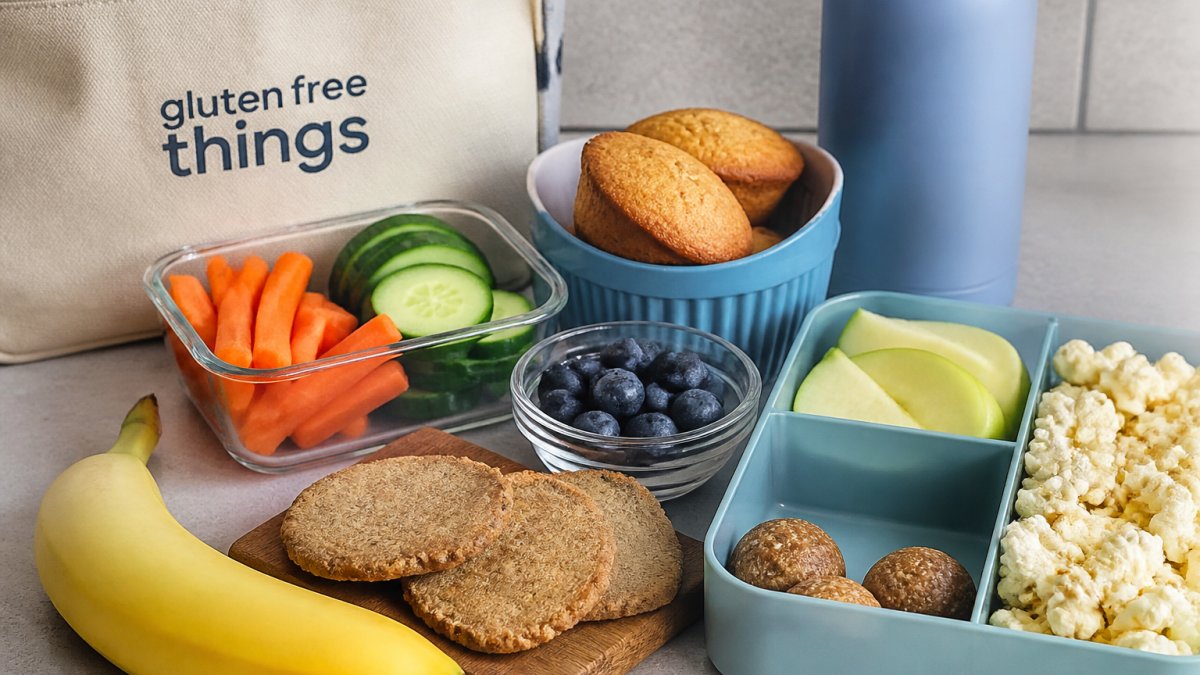
- Oat and seed energy bites made with sunflower seed butter instead of peanut butter
- Banana bread baked with a gluten-free flour blend
- Roasted chickpeas tossed in olive oil and salt
The catch: cross-contact risk lives in your own kitchen. If anyone eats peanut butter, use separate utensils, boards, and spreads.
Dairy-Free School Snacks Without the Guesswork
Dairy-free snacks are easier to find than most parents expect, but "dairy-free" and "milk-free" are not always the same claim on a label. Milk proteins like casein and whey hide in crackers, cookies, and even some chips. The FDA guidance on food allergen labeling explains which allergens must be declared by law, and milk is one of them, which gives you a reliable place to look.
Fruit, Veggie, and Grain-Based Options
These options skip dairy entirely without a specialty brand:
- Applesauce cups - the Center for Science in the Public Interest lists applesauce among simple allergen-free classroom snack ideas
- Rice cakes - plain varieties are the safest starting point; flavored versions may add dairy-derived ingredients
- Carrot and cucumber sticks with a dairy-free hummus
For a savory crunch, cheese crisps work only if dairy isn't the allergen you're avoiding. Whisps Cheese Crisps are a crunchy packaged pick, but they contain cheese and are off the table for a milk allergy.
How to Read Food Labels for Allergens Before You Buy
Reading a food label for allergens takes about 20 seconds once you know the three places to look: the Contains statement, the ingredient list, and the advisory statement below it. Most mistakes happen because a parent stops after step one.
Here's the sequence we recommend:
- Find the "Contains" line. Federal law requires the top nine allergens to be named in plain language, either in the ingredient list or in a separate Contains statement.
- Read the full ingredient list anyway. "Contains" covers the big nine, but your child may react to something outside that list.
- Check the advisory statement. Look for "may contain," "made in a facility with," or "made on shared equipment."
- Check the manufacturer's allergen page. Brands like Safe + Fair publish allergen policy details that go beyond the package.
- Recheck every new package. Recipes and suppliers change without a redesign on the box.
Label Element | What It Tells You | What It Doesn't Tell You |
|---|---|---|
Contains statement | Which top-nine allergens are intentionally in the product | Whether the line was shared with other allergens |
Ingredient list | Full recipe, including allergens outside the top nine | Cross-contact at the facility level |
"May contain" advisory | Possible unintentional cross-contact | How much risk, or how the facility is cleaned |
Manufacturer allergen page | Facility practices, dedicated lines, testing | Batch-level variation |
Decoding 'May Contain' and Cross-Contact Warnings
Cross-contact is the transfer of an allergen from one food or surface to another, often during manufacturing or food prep. Unlike cross-contamination (bacteria), it's the risk that matters most for a child with a severe allergy.
"May contain" statements are voluntary in most cases, so the absence of a warning does not prove a product is safe, it means the manufacturer chose not to include one or judged the risk low.
Allergy-Friendly Classroom Snacks for Safe Sharing
Classroom snacks for sharing clear a higher bar than a lunchbox snack: they have to work for every child in the room, not just yours.
Start With the Classroom Policy, Not the Grocery Aisle
Most schools publish an allergy or wellness policy governing what can come into the room. Before you shop, ask the teacher or front office:
- Is this a nut-free classroom, a nut-free school, or a nut-free table? The scope changes what you can send.
- Are homemade items allowed for shared snacks, or is sealed packaging required? Many classrooms require original packaging for anything shared.
- Is there a current allergy list for the room? Teachers can usually share the allergens to avoid without naming the child.
A short email before the first snack day prevents most of the awkward conversations later. The Asthma and Allergy Foundation of America's school resources offers parent-facing guidance on navigating school allergy policies and communicating with staff.
Shop Gluten Free Vegan Products →
Safe Sharing Practices Teachers Appreciate
- Send individually wrapped items, never a bulk bag poured into a bowl
- Keep the original packaging so the ingredient list stays attached
- Avoid homemade treats for classroom-wide sharing unless the teacher requests them
Emergency Readiness and No-Swap Rules
Even a well-chosen snack does not make a classroom universally safe. Teach kids two habits:
- No food swapping. Kids should not trade, share, or accept food from classmates, even if it looks safe.
- Keep packaging visible. If a reaction happens, staff need the label to identify ingredients quickly.
Make sure the teacher knows where your child's emergency plan and medication are stored, and confirm the snack you send matches that plan. If your child has an epinephrine auto-injector, the school's protocol should be on file before the first shared-snack day. Clear communication regarding these protocols ensures that staff members can quickly access vital emergency medical information when a reaction occurs.
Homemade vs. Packaged: Budget, Freshness, and Convenience
Packaged snacks cost more per serving but remove the label-reading burden at 7 a.m. Homemade snacks cost less but add prep time and kitchen cross-contact risk. Most families land somewhere in the middle.
Factor | Packaged Snacks | Homemade Snacks |
|---|---|---|
Cost per serving | Higher; individually wrapped items often cost the most per ounce | Lower; batch ingredients stretch across many servings |
Prep time | None | 20-60 minutes per batch, plus cooling and portioning |
Label clarity | Printed allergen statement and Contains line | You are the label; you control every ingredient |
Cross-contact risk | Facility-level; depends on manufacturer practices | Your kitchen; depends on your cleaning and storage habits |
Shelf life | Weeks to months in the pantry | Days in the fridge, longer if frozen |
School acceptance | Usually accepted in original packaging | Varies by school policy; many classrooms require sealed packaging |
Availability | Widely available at grocery, big-box, and online retailers | Depends on pantry staples and kitchen access |
Where the Real Cost Difference Shows Up
Packaged allergen-friendly bars and cookies often carry a premium because they're made on dedicated lines or in dedicated facilities. That premium buys label transparency and convenience. Homemade snacks flip the trade: cheaper per serving, but you absorb the time and the responsibility for verifying every ingredient.
A practical split: buy packaged bars, popcorn, and applesauce for the daily lunchbox, and batch-bake one homemade item on the weekend for variety.
Storage and Freshness Notes
- Packaged bars and popcorn: store in a cool, dry pantry; check the best-by date before packing.
- Applesauce cups and fruit pouches: shelf-stable until opened; refrigerate leftovers.
- Homemade energy bites and baked goods: refrigerate for up to a week, or freeze in single-serve portions and pull one the night before.
Availability and Substitutions
If a specific brand is out of stock, look for the same category rather than the same product: a seed-based bar can stand in for another, and plain popcorn can replace flavored as long as the label is clean. Keep one backup item in the pantry so a sold-out shelf doesn't derail the week.
Balanced Nutrition and Age-Appropriate Portions
A snack that is safe but not filling just means a hungry kid by 2 p.m. Aim for two of the three: a grain or starch, a protein, and a fruit or vegetable, that combination holds kids longer than a single-item snack.
Portion guidance by age:
- Ages 4-6: one small snack item plus a fruit or veggie
- Ages 7-9: one snack item, one protein, one fruit or veggie
- Ages 10-13: two snack items plus a protein and a fruit or veggie
The USDA's MyPlate guidance for children is a useful reference for building balanced snack combinations without overthinking it. Pair a seed bar with apple slices, or rice cakes with sunflower seed butter and banana.
Conclusion: Building a Snack Routine That Works
The hardest part of allergen free snacks for school isn't finding options. It's keeping the routine running when schedules get tight and labels change.
If baking at home is part of your plan, Gluten Free Things makes it easier to keep staples on hand.
Get started with Gluten Free Things and build a snack drawer your whole family can reach into without a second thought.
Frequently Asked Questions
What are some dairy- and nut-free snacks for school?
Good options include applesauce cups, plain rice cakes, seed-based bars, and popcorn labeled free from the top nine allergens. Always check the ingredient list and 'may contain' statement because recipes change. For a heartier choice, many families pack gluten-free bread or bagels from a dedicated allergen-free bakery like Gluten Free Things, which avoids gluten, eggs, dairy, soy, nuts, and corn. Confirm each product's current label before sending it to a nut-free or dairy-free classroom.
How can I check whether a packaged snack is safe for my child?
Start by reading the full ingredient list, not just the front-of-package claims. Look for the allergen in bold or in a 'Contains' statement, then check for 'may contain' or 'made in a facility with' warnings that signal cross-contact risk. When in doubt, call the manufacturer to ask about shared equipment and cleaning practices. Knowing how to read food labels for allergens is the single most reliable way to screen snacks before they go in the lunchbox.
Are homemade snacks safer than packaged snacks for food allergies?
Homemade snacks give you full control over ingredients, which reduces cross-contact risk if your kitchen is already allergen-aware. Packaged snacks, on the other hand, carry standardized labels and consistent manufacturing, which some families find easier to verify. The safer choice depends on your kitchen setup and the specific allergen. Many parents use a mix of both, relying on clearly labeled packaged items for busy mornings and homemade options when time allows.
What snacks can I send to a nut-free classroom?
Safe choices for a nut-free classroom include applesauce pouches, rice cakes, popcorn labeled nut-free, seed-based bars, and fresh fruit. Avoid anything with peanut or tree nut ingredients, and watch for 'may contain peanuts' or 'processed in a facility with tree nuts' warnings. If you pack homemade items, prepare them on clean surfaces with dedicated utensils. Always confirm your school's specific nut-free policy, since rules vary by district and classroom.
How do I find out which allergens a school restricts?
Check your school district's website or student handbook for its allergy policy, which usually lists restricted allergens and classroom rules. You can also ask your child's teacher or the school nurse directly, especially at the start of the year. Some schools send home a letter listing banned items for a specific classroom. Once you know the restrictions, you can plan allergy-friendly classroom snacks that fit the policy and keep every student safe.