 how-to
How to Identify Cross Contamination in Your Kitchen
Table of Contents
- What Cross Contamination Actually Looks Like
- Cross-Contact vs Cross-Contamination: Why the Difference Matters
- Common Sources of Contamination in Small and Home Kitchens
- How to Identify Cross Contamination Through Tool-Based Safety Checks
- Food Safety Best Practices for Allergens at Home
- How to Choose a Dedicated Gluten-Free Bakery You Can Trust
- What to Do After Contamination Happens
- Conclusion
- Frequently Asked Questions
Last Updated: September 23, 2026
What Cross Contamination Actually Looks Like
Cross contamination is the transfer of harmful bacteria, viruses, or allergens between surfaces or foods, often invisibly.
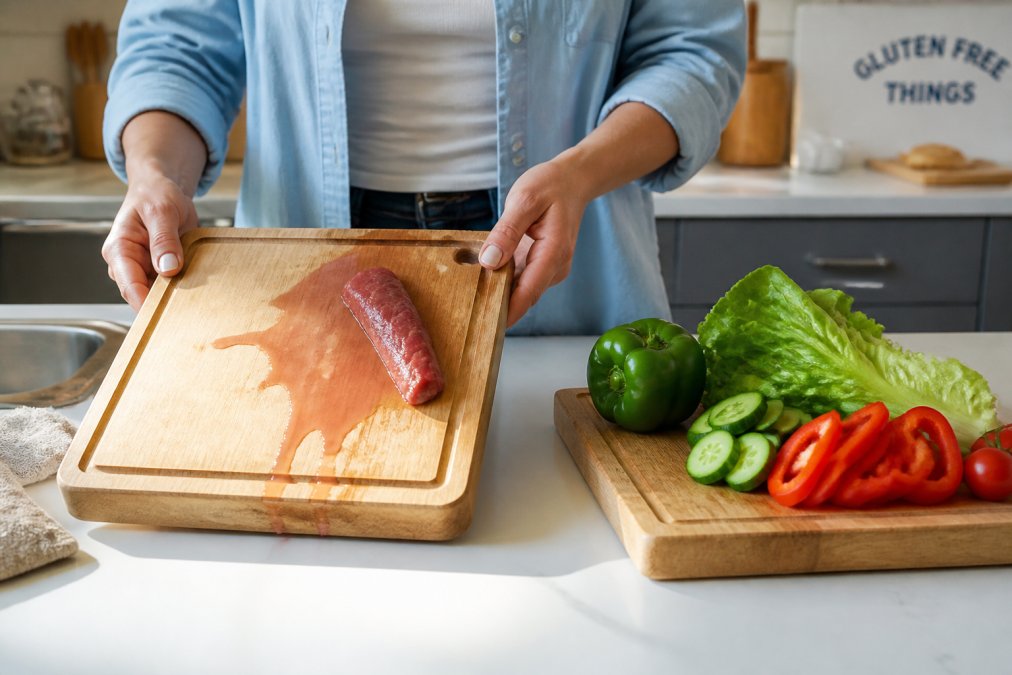
This guide from Gluten Free Things walks through how to identify cross contamination before it makes someone sick. Most people look for obvious messes. The real danger is usually the opposite: a clean-looking counter, a wiped knife, a shared spoon.
Visual Signs Most People Miss
You cannot see bacteria, but you can see the conditions that let them spread:
- Juice from raw meat pooling near ready-to-eat foods
- The same towel wiping hands, counters, and dishes
- A knife used on raw chicken, then on bread
- Drips from a thawing package in the fridge
- Sticky residue on a "clean" countertop
Cross-Contact vs Cross-Contamination: Why the Difference Matters
Cross-contact and cross-contamination both involve transfer, but they are not the same thing. The difference matters most for people with allergies or celiac disease.
| Factor | Cross-Contamination | Cross-Contact |
|---|---|---|
| What transfers | Bacteria, viruses, parasites | Allergens like gluten, dairy, nuts |
| Killed by cooking | Yes | No |
| Main risk | Foodborne illness | Allergic reaction |
| Key fix | Wash and sanitize | Separate tools and spaces |
Common Sources of Contamination in Small and Home Kitchens
Small kitchens hide more risks than big ones. Less counter space means more sharing of tools and surfaces. A few spots cause most problems:
- Sponges and dish rags. These stay damp and hold bacteria for days.
- The fridge. Raw meat stored above fresh produce can drip downward.
- Shared condiments. A knife that touched bread then goes back in the mustard jar.
- Handles and knobs. Fridge handles, faucets, and drawer pulls get missed during cleaning.
- Reusable grocery bags. Raw meat juices can leak and sit in the fabric.
How to Identify Cross Contamination Through Tool-Based Safety Checks
Your tools tell the story. Walk through your kitchen and check each item against its job, if a tool does two jobs, it is a risk. Assign every tool a single role.
- Count your cutting boards. You need at least two: one for raw meat, one for produce.
- Check your utensils. Are there separate spoons for tasting and stirring?
- Look at your storage containers. Are raw and cooked foods sealed separately?
- Inspect your sponges. Do they smell? Replace them.
- Check your fridge layout. Is raw meat on the bottom shelf?
- Open the drawer. Is there a knife that lives loose and gets used on everything?
Cutting Boards, Utensils, and Storage Containers
Color-coding works, but only if you commit to a system. The standard commercial scheme translates cleanly to a home kitchen:
- Red, raw meat and poultry
- Yellow, raw poultry (kept separate from red if you handle a lot of chicken)
- Green, fruits and vegetables
- Blue, raw fish and seafood
- White, dairy and baked goods
- Brown, cooked meat
Reading the Signs on Your Tools
A cross-contaminated tool usually shows it before anyone gets sick. Check for:
- A cutting board that still smells like raw onion or fish after washing
- A sponge that has turned dark or sour-smelling within a day or two of use
- A knife handle with sticky residue where the blade meets the grip
- A storage container with a faint ring of dried juice at the bottom
- Tongs with food particles caught in the hinge spring
Food Safety Best Practices for Allergens at Home
Allergen safety at home follows one rule: keep dedicated tools and spaces. A shared jar of peanut butter with a used knife can contaminate the whole jar.
Here is a simple checklist for a safer kitchen:
- Assign a dedicated cutting board for allergen-free prep
- Use separate utensils for gluten-free and regular foods
- Store allergen-free items on a top shelf, sealed
- Wipe counters before and after allergen-free prep
- Wash hands for at least 20 seconds before handling allergen-free food
- Keep a separate toaster or use toaster bags
How to Choose a Dedicated Gluten-Free Bakery You Can Trust
A dedicated gluten-free bakery uses only gluten-free ingredients in its kitchen, no shared flour, mixers, or ovens. That is the gold standard for anyone with celiac disease.
When you evaluate a bakery, ask these questions:
- Is the facility fully gluten-free, or just "gluten-free options"?
- Are the top allergens handled in a separate space?
- Can staff explain their cleaning process?
- Do they label products clearly?
What to Do After Contamination Happens
Most guides stop at prevention. This section covers what to do after contamination happens, and the two cases, pathogens versus allergens, have opposite rules.
First, Decide Whether the Food Can Be Saved
Ask one question: did a pathogen transfer, or did an allergen transfer?
-
If the contaminated food will be cooked to a safe internal temperature, the bacteria are killed. A raw chicken breast that touched a cutting board is fine once it reaches 165°F. The board is the problem, not the chicken.
-
If the contaminated food is ready-to-eat and will not be cooked, salad, cut fruit, bread, cheese, leftovers, throw it out. There is no reliable way to make it safe at home.
-
If the contaminated food sat at room temperature for more than two hours, throw it out regardless. Bacterial growth, not just transfer, is now the risk.
-
There is no rescue. Cooking does not destroy allergens. Heat, freezing, and dilution do not remove them.
-
Throw out any food that touched the allergen, including the whole jar if a used knife went into it. A jar of peanut butter or mustard that received a contaminated knife is now contaminated throughout.
-
Do not try to rinse, scrape, or cut away the affected portion. Allergen proteins spread through liquids and oils, so the "clean" part is not clean.
Clean in the Right Order
Once the food decision is made, clean the area. Order matters, wiping before washing just spreads the contaminant.
- Remove and discard any food that touched the contaminant.
- Wash surfaces with hot, soapy water. Work from the least contaminated area toward the most contaminated.
- Sanitize with a food-safe sanitizer. A diluted bleach solution or a commercial kitchen sanitizer both work; follow the label's contact time, which is usually at least 30 seconds of visible wetness.
- Wash any tools that touched the contaminated item, including the knife, the board, the tongs, and the counter edge.
- Wash your hands for at least 20 seconds with soap and water.
- Replace sponges or towels that were used. A sponge that wiped up raw meat juice is now a contamination source for everything it touches next.
When to Throw Out the Whole Batch
Some situations call for discarding more than the obvious item:
- A used knife went into a shared jar of peanut butter, jam, or mustard, discard the jar.
- Raw meat juice dripped onto a shelf of ready-to-eat foods, discard everything the drip touched.
- A flour cloud settled over an allergen-free prep area, discard any uncovered food in that space.
- A sponge used on raw meat was then used on dishes, rewash every dish it touched.
Conclusion
Spotting cross contamination takes practice, but the signs are there once you know where to look. Check your tools, fridge, and towels, separate raw from ready-to-eat, and keep dedicated spaces and tools for allergen safety.
Frequently Asked Questions
What are 5 examples of cross contamination?
Common examples include using the same knife to cut raw chicken and then lettuce without washing it, placing cooked burgers on a plate that held raw patties, storing raw meat above ready-to-eat foods in the fridge so juices drip down, dipping a spoon back into a sauce after tasting it, and using a shared towel to wipe both raw meat surfaces and clean dishes. Each transfers harmful bacteria or allergens to foods that won't be cooked again.
How do you know if you have cross contamination?
You can often spot cross contamination by looking for visible signs: raw meat juices on a cutting board, a knife that touched raw fish then bread, or crumbs from a gluten-containing product in a gluten-free area. If you or a family member develops foodborne illness symptoms or an allergic reaction after a meal, contamination likely occurred during food preparation. Keeping a food safety checklist helps you trace the source.
What is the difference between cross-contamination and cross-contact?
Cross-contamination usually refers to the transfer of harmful bacteria, viruses, or parasites from one food to another, often through improper food handling. Cross-contact specifically describes the transfer of allergens, like gluten or nuts, to a food that is supposed to be free of them. The distinction matters because allergen cross-contact can trigger a severe reaction even when no pathogens are present, and cleaning methods may differ.
How can you identify high-risk environments for allergen exposure?
High-risk environments include shared kitchen spaces where gluten-containing flour is used near gluten-free baking, buffets with shared utensils, and bakeries that don't have dedicated allergen-free prep areas. Look for visible flour dust, shared mixers, or porous surfaces that trap particles. When choosing a dedicated gluten-free bakery, ask about their separation practices and whether they test for allergens.